
THE 9 BEST AI TOOLS FOR PRIVATE EQUITY INVESTMENT TEAMS (2026 PICKS)
Private equity AI tools have reached a tipping point: 85% of dealmakers now use AI to automate daily tasks, up from 76% just a year earlier. AI in private equity now touches every phase of the workflow, from deal sourcing and due diligence to portfolio monitoring and LP reporting. The results are compelling. Bessemer Venture Partners reclaimed 234 hours per analyst, while BlackRock achieved a 5× increase in research throughput. This guide examines the best private equity AI tools that are helping investment teams compress research cycles, surface actionable insights, and outpace competitors.
Affinity – Relationship Intelligence CRM
Image Source: Affinity
What It Is
Affinity operates as a relationship intelligence CRM purpose-built for private equity dealmakers. The platform automatically captures contact and company data from emails, calendar events, and meetings to eliminate manual data entry. Proprietary algorithms analyze communication patterns across a firm’s shared network, revealing relationship strength and connection paths that typically remain hidden in scattered inboxes. Used by over half of top private equity firms, Affinity transforms network data into actionable intelligence for deal sourcing and relationship management.
Why Private Equity Teams Use It
The platform addresses a workflow problem that costs PE firms significant time. Automated data capture saves each dealmaker over 200 hours annually by syncing communication data and automatically creating contact profiles. Relationship strength scoring based on email frequency, recency, and response rates identifies which team member holds the strongest connection to a target company founder or decision-maker.
This intelligence produces measurable results. Warm introductions generated through Affinity’s relationship mapping help firms close deals 25% faster. One private equity firm reported a 66% increase in deals reviewed annually since implementation, while venture firm 8VC cut deal flow process time by 50%. The platform supports 3,000+ organizations across 80+ countries, with customer adoption rates exceeding 96%.
Key Capabilities
Affinity’s core functionality centers on automatic activity capture that logs every email, meeting, and introduction without manual input. The system enriches records automatically using data from over 40 trusted sources, including Crunchbase, Clearbit, Dealroom, and PitchBook.
Relationship intelligence features include strength scoring for every contact in a firm’s network, inferred connections based on shared work history, and automated triggers that alert users when relationship scores drop below set thresholds. The platform manages approximately 200 companies in weekly due diligence reviews while maintaining visibility across 9,000-person networks.
Deal pipeline tracking offers configurable stages from sourcing through portfolio management, with separate LP relationship management for fundraising cycles. Chrome extensions surface contact details directly in Gmail, whereas mobile apps provide iOS and Android access to relationship data. The platform maintains enterprise-grade security with SOC2 Type II, GDPR, CCPA compliance, and ISO27001 certification.
Pricing and Plans
Affinity structures pricing across four tiers based on team size and feature requirements:
| Plan | Annual Cost Per User | Core Features |
| Essential | $2,000 | Automated activity capture, relationship scoring, deal pipeline management |
| Scale | $2,300 | Everything in Essential plus analytics, Chrome extensions, enhanced relationship mapping |
| Advanced | $2,700 | Everything in Scale plus AI meeting intelligence, premium data enrichment, IP allowlists |
| Enterprise | Custom | Everything in Advanced plus SSO, custom data governance, full API access, dedicated support |
For a five-person team on the Scale plan, annual investment totals approximately $11,500. Implementation typically completes within 60 days, with setup supported by private capital workflow experts.
Ideal For
Early-stage funds managing initial deal pipelines benefit from the Essential tier’s automated capture and basic relationship intelligence. Mid-market firms scaling deal flow find value in the Scale plan’s analytics and sourcing extensions. Established firms managing multiple funds require Advanced or Enterprise tiers for AI-powered meeting intelligence, enhanced security controls, and API integrations with existing portfolio monitoring systems. Firms already using Salesforce can access Affinity’s relationship intelligence through the Affinity for Salesforce add-in.
PitchBook – Comprehensive Market Data Platform
Image Source: PitchBook
What It Is
PitchBook tracks capital markets activity across the global private equity landscape. Since launching in 2009, the platform expanded from venture capital focus to serve private equity firms, corporate development teams, law firms, and universities. Morningstar acquired the company and now owns it completely. As of December 31, 2024, PitchBook served 10,600 accounts with 125,000 users, generating $618 million in annual revenue. The platform functions as a centralized intelligence hub covering millions of companies, deals, funds, and market participants across private capital markets.
Why Private Equity Teams Use It
Private equity teams rely on PitchBook to compress research cycles and validate investment theses. The platform surfaces limited partner commitment data, mandate information, and fund preferences by asset class to identify LPs most likely to commit capital. Deal sourcing benefits from real-time market activity tracking, customizable alerts for emerging industries, and competitive intelligence on rival firms’ investment patterns.
Due diligence workflows access deal descriptions with EBITDA, revenue figures, and company profiles for prospect comparison. Buyout transaction details and late-stage VC valuations help teams price deals accurately. Exit planning draws on comparable company exit data and transaction multiples to time exits at maximum value. Fund analysis tools compare portfolio construction, industry focus, IRR, and cash flow multiples across similar strategies. Teams can research which companies a PE fund invested in, investment sizes, lead partners, and gage fund success based on performance metrics.
Key Capabilities
PitchBook maintains datasets covering 10.1 million companies, 600,000 investors, 2.9 million deals, and 156,000 funds. The platform tracks 62,000 limited partners with commitment histories, mandates, and investment preferences. Contact data spans 4.7 million professionals, while service provider information covers 122,000 advisors. Credit market coverage includes 450,000 data points, 528,000 debt financings, and 14,500 lenders.
AI and machine learning capabilities accelerate insights through PitchBook’s proprietary data. The platform integrates with Excel, PowerPoint, and Chrome for workflow efficiency. Salesforce integration connects market data directly into CRM systems. Mobile applications provide iOS and Android access to platform features. Lumonic monitors private market portfolios, whereas API access enables direct data feeds into internal systems.
Pricing and Plans
PitchBook structures pricing based on user count, organization type, contract length, and premium add-ons. The platform does not publish standard pricing, requiring sales consultation for custom quotes. Customer-reported costs vary considerably:
| Users | Annual Cost Range | Cost Per User |
| 1 | $12,000 – $40,000 | $12,000 – $40,000 |
| 2 | $18,000 – $25,000 | $9,000 – $12,500 |
| 3 | $18,000 – $32,000 | $6,000 – $10,667 |
| 5 | $35,000 – $45,000 | $7,000 – $9,000 |
| 7 | ~$60,000 | ~$8,571 |
| 10 | ~$70,000 | ~$7,000 |
Average revenue per account reaches $58,300 annually, whereas per-user revenue averages $4,900. Volume discounts apply to larger teams. A solopreneur plan runs $20,000 per year for single users.
Ideal For
Institutional investors at venture capital firms, private equity shops, and investment banks justify the $20,000+ annual investment for comprehensive private market data. Mid-market firms executing deal sourcing, M&A, and corporate development workflows benefit from historical deal comparables and valuation data. Fundraising teams leverage LP commitment data and mandate information to target capital sources effectively. Firms requiring deep coverage across geographies and asset classes find value in PitchBook’s international database scope, though U.S.-only data packages are not available.
AlphaSense – AI-Powered Research Platform
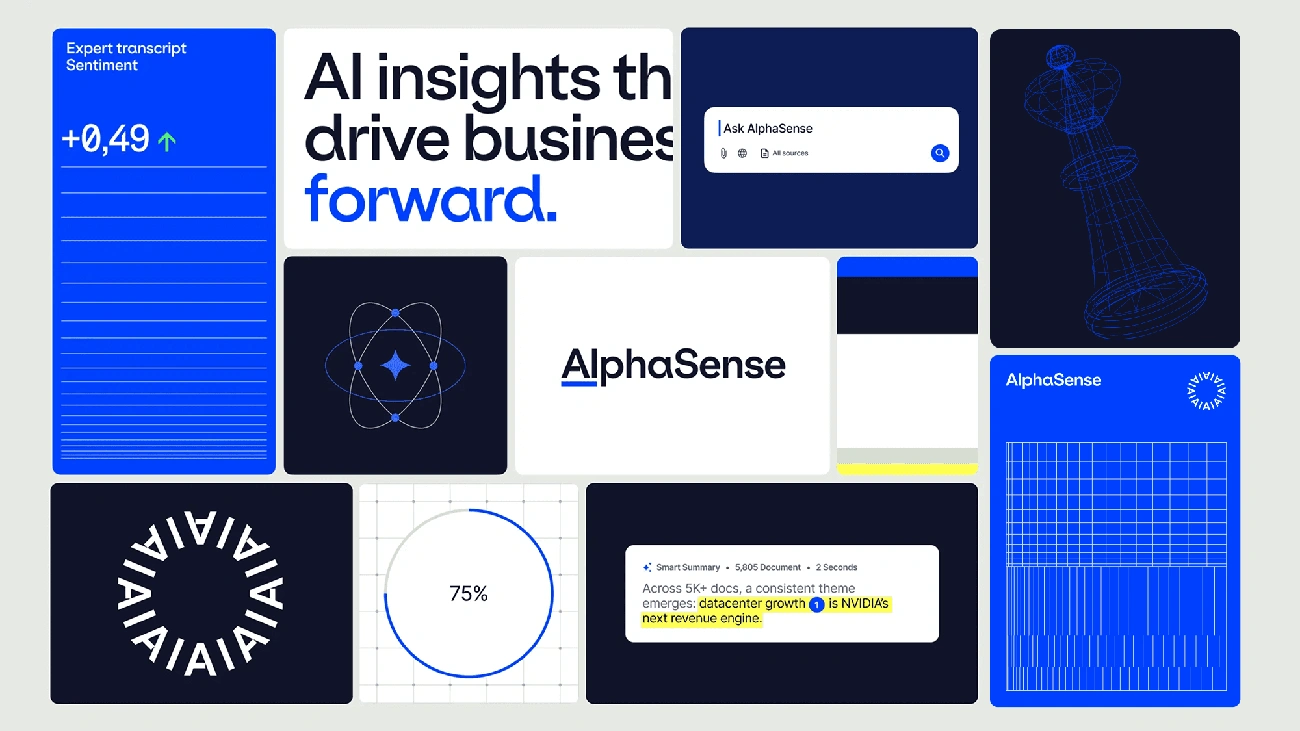
Image Source: AlphaSense
What It Is
AlphaSense delivers AI-powered market intelligence by analyzing 500M+ premium documents spanning financial filings, broker research, expert interviews, and news sources. The platform uses natural language processing and machine learning to interpret context and industry terminology, eliminating irrelevant results that plague traditional search methods. Trusted by 85% of S&P 100 companies and 70% of top hedge funds, AlphaSense transforms fragmented research into structured insights through proprietary vertical language models trained specifically for financial analysis.
Why Private Equity Teams Use It
Eighty percent of leading private equity firms rely on AlphaSense to compress research cycles and surface investment opportunities. The platform addresses a critical workflow gap: accessing hard-to-obtain private company data and validating investment theses at speed. One PE firm increased platform engagement by 300% after implementation, whereas deal teams report 10x acceleration in due diligence processes.
The platform’s value centers on data breadth and depth. Users access structured financials for 1.4 million private companies, details nearly impossible to locate elsewhere. Wall Street Insights aggregates equity research from 1,500+ providers including Goldman Sachs, J.P. Morgan, and Deutsche Bank, delivering analyst perspectives in seconds rather than days. The Expert Insights library contains 200,000+ transcripts covering 25,000 public and private companies, providing first-hand intelligence on target markets and competitors.
Key Capabilities
Generative Search functions as an AI analyst, understanding market research intent behind natural language queries and delivering cited answers instantly. Deep Research performs multi-step analysis across millions of documents, producing detailed company primers and market landscapes in 30 minutes. Generative Grid applies multiple AI prompts to numerous documents simultaneously, organizing answers in table format for CIM reviews, earnings analysis, and competitive comparisons.
Financial Data integrates standardized statements and consensus data across 19,000+ public companies, sector-specific KPIs from institutional-grade models, and transaction intelligence covering 1 million M&A deals and 750,000 funding rounds. Channel Checks automates expert interviews through AI agents, extending primary research capabilities directly into workflows. The platform supports 37+ languages and maintains SOC 2 Type II compliance with enterprise SSO integration.
Pricing and Plans
AlphaSense structures pricing around per-seat annual licenses with tiered content access:
| Tier | Annual Cost Per Seat | Core Access |
| Market Intelligence | $10,000 – $20,000 | External content library, AI search tools |
| Enterprise Intelligence | Custom | Adds internal content integration |
| Wall Street Insights | Add-on | Premium equity research from 1,700+ brokers |
| Expert Transcript Library | Add-on | 240,000+ expert interviews |
Average deal sizes range from $50,000 to $100,000, with enterprise agreements exceeding $1 million for larger customers. The platform serves 7,000 enterprise customers with no self-service pricing available.
Ideal For
Mid-market PE firms conducting TAM analysis, market sizing, and reputational risk management benefit from comprehensive content coverage and AI-driven synthesis. Growth equity teams sourcing emerging trends leverage Generative Search to identify companies outside traditional radar. Buyout shops executing intensive due diligence require Expert Insights and Wall Street research for management analysis and competitive positioning validation.
Third Bridge – Expert Network Intelligence
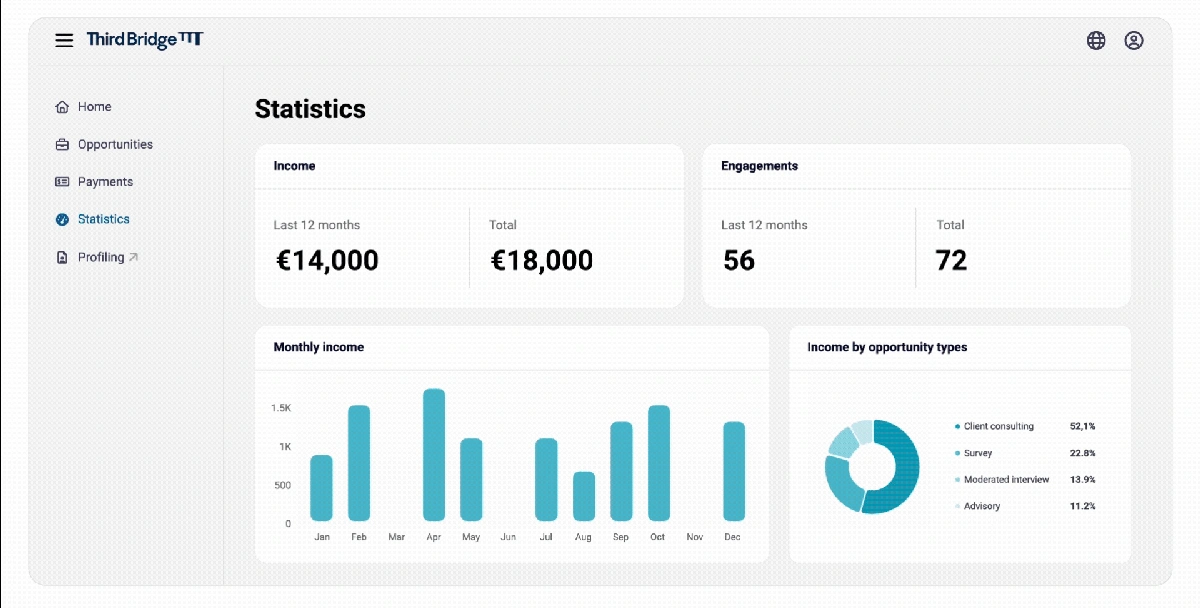
Image Source: Third Bridge
What It Is
Third Bridge combines direct expert consultations with the largest interview transcript archive in the industry. Founded in 2007, the firm operates 12 offices across four continents with 1,500 employees serving institutional investors. The platform maintains access to 1.5 million vetted industry experts and houses over 100,000 expert transcripts covering 65,000 public and private companies. This dual model delivers both on-demand expert calls custom-sourced for specific deal questions and a searchable library for rapid market context.
The firm pioneered Model Context Protocol (MCP), which grounds AI directly in proprietary expert transcripts to eliminate hallucination risk and maintain citation integrity. Third Bridge became the first expert network to integrate its transcript library directly into major large language models, allowing analysts to query expert insights within existing AI workflows.
Why Private Equity Teams Use It
Deal teams value Third Bridge for speed and institutional compliance rigor during compressed diligence cycles. Custom expert sourcing delivers relevant specialists matched to specific investment questions, whereas the existing transcript library enables teams to build context before commissioning new calls. Survey capabilities unlock intelligence from vetted expert networks in 72 hours, accelerating validation of commercial assumptions and market sizing.
The platform addresses qualitative insight gaps where financial data alone proves insufficient. Private company coverage and niche sector depth help teams evaluate targets lacking traditional analyst coverage. Expert Commentary adds peer-reviewed perspectives from multiple specialists to original interviews, surfacing contrarian views and additional data points within single transcripts.
Key Capabilities
Direct expert consultations connect deal teams with former executives, competitors, and customers of target companies. Global sourcing teams recruit specialists across sectors and geographies, with experts custom-matched rather than pulled from static databases. Compliance frameworks and risk management technology ensure interactions meet institutional standards.
The Library provides immediate access to analyst-led and investor-led interview transcripts, eliminating preliminary research time. AI-powered search and summarization surface relevant insights across the corpus, with alerts notifying users of new content on tracked topics. Company value chains visualize supplier and customer relationships, whereas Maps products model competitive dynamics and market structures.
Expert Commentary integrates peer-reviewed insights from additional specialists into original interview takeaways. AI automation identifies relevant experts for review, with submissions screened for material non-public information before analyst verification. This multi-perspective approach helps teams stress-test investment theses against diverse viewpoints.
Pricing and Plans
Third Bridge structures pricing through flexible models based on usage patterns and team requirements:
| Model | Structure | Best For |
| Credit-based | Prepaid credits consumed per interaction | Active deal environments with predictable volume |
| Pay-as-you-go | Per-call billing after engagement | Episodic research needs |
| Subscription | Flat annual fee for platform access | Continuous monitoring and portfolio support |
Expert hourly rates vary with Third Bridge applying markups. Additional services including transcripts, recordings, and research support may incur separate charges or consume prepaid credits. Pricing packages target institutional clients executing regular diligence workflows.
Ideal For
Buyout firms conducting commercial due diligence benefit from expert validation of market assumptions and competitive positioning. Early-stage screening leverages the Library for rapid sector understanding before deeper investigation. Portfolio monitoring teams use surveys and ongoing expert access to track market developments affecting holdings. Credit investors analyzing issuers gain qualitative perspectives on business quality and restructuring risks.
Grata – Private Markets Discovery Tool
Image Source: grata.com
What It Is
Grata uncovers private market intelligence across 21M+ companies that traditional databases miss. The platform combines AI-powered search, proprietary financial data, and purpose-built workflows to help dealmakers find founder-owned, bootstrapped, and non-sponsored businesses. Launched as the first private intelligence search engine for company discovery, Grata addresses a fundamental problem: nearly half the U.S. economy remains invisible to dealmakers because private companies lack discoverable data.
The platform uses contextual AI that reads company websites like analysts, interpreting language, structure, and behavior to infer missing data points such as revenue, classifications, and business models. This approach delivers 99% accuracy through AI extraction, machine learning models, and multi-source reconciliation.
Why Private Equity Teams Use It
Dealmakers gain visibility into markets competitors overlook. Grata surfaces high-potential companies and maps entire sectors quickly, accelerating speed to insights and conviction. The platform provides investment-grade proprietary data on private companies, including financial profiles with deal values, valuations, and transaction details sourced from verified markets.
Firms access 10M+ executive contacts and exclusive live deals shared by vetted advisors before hitting broader markets. Exit readiness signals identify companies 6-12 months before active sale processes begin, creating first-mover advantages. Syncs with Salesforce, HubSpot, and DealCloud maintain unified workflows across sourcing and pipeline management.
Key Capabilities
Agentic Search combines natural language input with context-aware refinement to surface high-fit targets in seconds. The system deciphers intent and suggests relevant terms, companies, or queries instantly. Deep Search blends website analysis with industry classification to find and rank targets within sectors.
Financial Profiles deliver comprehensive transaction data, investor information, and private market comps directly in company profiles. The platform covers founder-led, PE-backed, and enterprise software companies with revenue estimates, headcount growth indicators, and business model classifications. Market Intelligence tools provide comp sets, market fragmentation analysis, deal data, and valuation multiples.
Pipeline Management enables teams to share lists, notes, and custom labels from a synchronized source. Conference tools reveal event attendee lists with automated tracking of target participation. Contextual AI continuously validates signals through anomaly detection and user contributions.
Pricing and Plans
Grata structures three packages aligned to deal team workflows:
| Plan | Key Features | Target Users |
| Growth | Private company data, executive contacts, keyword search, CRM integration, live deals network | Mid-market PE, growth equity, business development |
| Scale | Everything in Growth plus conference data, curated lists, deal multiples, bidirectional CRM syncs | Buy-side and sell-side advisors, corporate development |
| Enterprise | Everything in Scale plus seller intent signals, API access for custom integrations | Large PE firms requiring first-mover advantages |
The platform serves over 1,000 customers including 35 of the top 40 firms and 9 of the top 10 management consulting firms. Custom pricing requires sales consultation.
Ideal For
Early-stage funds benefit from Growth tier access to founder-owned companies and basic pipeline tools. Mid-market firms executing thematic sourcing leverage Scale tier market intelligence and automated CRM workflows. Large buyout shops require Enterprise features for seller intent signals and API integrations supporting proprietary sourcing systems.
Intapp DealCloud – Deal and Relationship Management
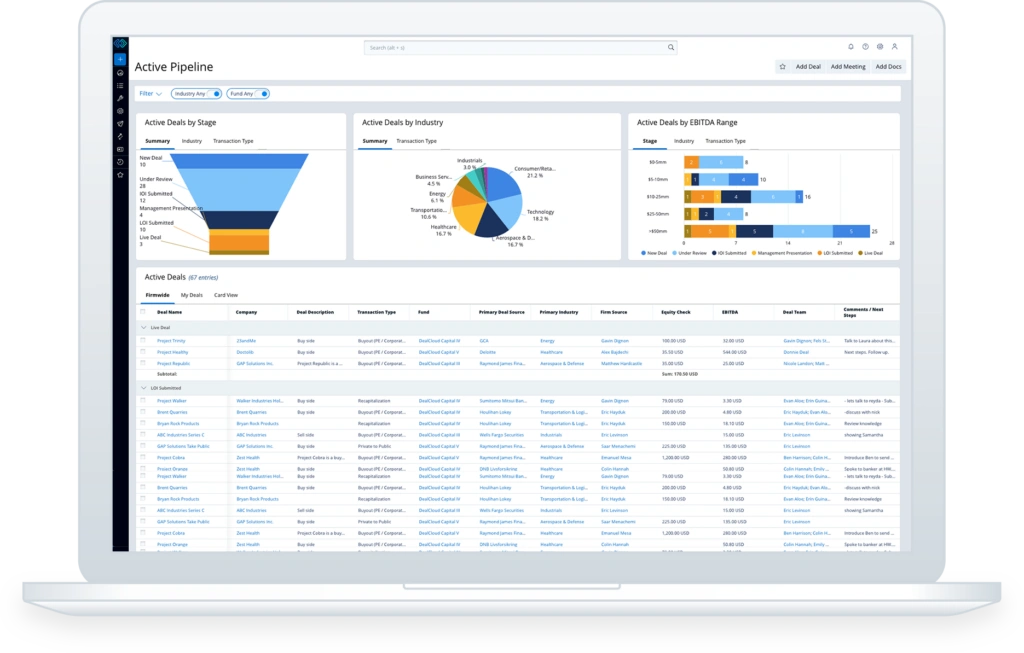
Image Source: Intapp
What It Is
Intapp DealCloud functions as an AI-powered deal and relationship intelligence platform built specifically for professional and financial services firms operating in regulated markets. Intapp acquired DealCloud in 2021 and now serves over 1,100 clients including leading private equity firms that rely on the system as their centralized source of truth for deals, relationships, and capital deployment. The platform distinguishes itself through enterprise-grade configurability, allowing firms to customize fields, deal stages, dashboards, and approval workflows to match complex investment committee processes and governance requirements.
Why Private Equity Teams Use It
Deal teams adopt DealCloud to eliminate fragmented data across scattered systems and inboxes. The platform’s relationship intelligence analyzes communications, deal flow, and engagements to surface opportunities and flag risks automatically. Zero-entry activity capture logs emails and meetings from Outlook without manual input, whereas AI summarization generates instant deal summaries and recommended next steps. One implementation at FMI Capital Advisors saved 8+ hours per week on transaction bidder list preparation. The Riverside Company reported that DealCloud replaced frustration with collaboration and streamlined decision-making processes, freeing senior management time for business growth.
Key Capabilities
Relationship intelligence features map connections across partners, investors, and clients while scoring relationship strength based on engagement patterns. Automated activity capture creates complete engagement records across counterparties. Configurable workflows standardize origination, due diligence, and execution with embedded compliance controls and role-based permissions. The platform integrates proprietary firmographic data on 14M+ companies and 200M+ contacts, plus third-party intelligence from PitchBook, Preqin, and FactSet. Mobile applications support iOS and Android access for offline data entry and syncing.
Pricing and Plans
DealCloud follows custom pricing structures based on user count and implementation scope:
| Metric | Range |
| Minimum Annual Cost | $85,000 |
| Maximum Annual Cost | $1,430,000 |
| Average Annual Cost | $505,000 |
| Per-User Cost | $15,000 – $40,000+ |
| Implementation Cost | $50,000 – $150,000+ |
Customers typically achieve 18% discounts off list pricing, translating to approximately $80,000 in savings.
Ideal For
Firms with 20+ users, complex multi-stage workflows, and dedicated operations staff benefit most from DealCloud’s configurability. Large PE firms and investment banks requiring formal governance, investment committee approvals, and LP reporting discipline find value in the structured approach. Total cost of ownership for a 10-person team can exceed $400,000 annually, positioning the platform for established firms prioritizing centralized institutional knowledge over lightweight CRM alternatives.
Standard Metrics – Portfolio Data Automation
Image Source: standardmetrics.io
What It Is
Standard Metrics automates portfolio data collection and analysis for 150+ venture capital and private equity firms managing over 10,000 companies. The platform combines AI-powered document parsing with human quality assurance to transform financial statements, cap tables, and operational reports into structured, audit-grade data. This hybrid approach delivers institutional accuracy at scale, supporting valuations, LP reporting, and quarterly reviews without the traceability issues that plague standalone AI tools.
The system processes data through preprocessing, LLM extraction, in-app analyst verification, and continuous accuracy evaluations. Portfolio companies submit metrics through standardized workflows, direct accounting integrations with QuickBooks and Xero, or managed data services where Standard Metrics’ team handles document extraction.
Why Private Equity Teams Use It
Firms adopt Standard Metrics to reclaim time spent on manual data consolidation. 8VC reduced data collection time by 95%, whereas January Capital achieved a 90% reduction in time spent cleaning financial data. Munich Re Ventures onboarded 35 portfolio companies across three funds in under one month.
The platform standardizes inconsistent metrics across portfolio companies so terms like ARR maintain consistent definitions for reliable comparisons. Benchmarking tools compare performance against anonymized data from 10,000+ venture-backed startups, sliced by revenue scale and sector. This context helps investment committees identify outliers and guide board conversations.
Key Capabilities
AI-powered parsing ingests financial statements with human review for audit compliance. The AI Analyst answers natural language queries across the portfolio, generating commentary for IC updates and LP reports. Standard Metrics’ MCP server enables Claude and other compatible LLMs to access portfolio data directly, maintaining security through SOC 2 Type II compliance.
Embedded business intelligence supports self-serve dashboards with governed metric definitions. Excel add-ins pull live data through formulas, whereas API access feeds centralized data warehouses.
Pricing and Plans
Standard Metrics does not charge per seat. Pricing follows enterprise models customized to portfolio size and data complexity. Portfolio companies access the platform free.
Ideal For
Institutional VC and PE firms managing large portfolios benefit from audit-grade data controls and benchmarking depth. Mid-market funds require automated parsing to scale beyond manual spreadsheet tracking. Emerging managers gain LP credibility through standardized reporting infrastructure.
Claude – Deep Analysis AI Assistant
Image Source: Anthropic
What It Is
Claude operates as Anthropic’s large language model trained for financial analysis tasks. The Financial Analysis Solution integrates market data from platforms including Databricks, Snowflake, PitchBook, and S&P Global into a unified interface. Claude 4 models outperform frontier models on financial research tasks, whereas Claude Opus 4 passed 5 out of 7 Financial Modeling World Cup levels with 83% accuracy on complex Excel tasks.
Why Private Equity Teams Use It
Deal teams leverage Claude to compress diligence timelines and accelerate modeling workflows. AIG reduced underwriting review timelines by 5x while improving data accuracy from 75% to over 90%. The platform executes full LBO models with five-year projections and debt schedules in minutes, tasks that historically required multi-hour analyst effort. Claude synthesizes screening results, contract risks, and model outputs into investment committee presentations, condensing processes from weeks to 48 hours.
Key Capabilities
Claude for Excel provides direct spreadsheet control, populating cells across ranges and building DCF models from natural language prompts. Financial institutions access real-time data through pre-built connectors to Box, Daloopa, FactSet, Morningstar, and Palantir. The platform handles Monte Carlo simulations, risk modeling, and compliance automation with expanded usage limits for demanding workloads. Data remains confidential by default, not used for model training.
Pricing and Plans
Individual subscriptions include Free (USD 0), Pro (USD 20/month), and Max (USD 100-200/month). Team plans start at USD 25/user/month for standard seats and USD 150/month for premium seats with Claude Code access. API pricing runs USD 5 input/USD 25 output per million tokens for Opus 4.6.
Ideal For
Mid-market firms benefit from Excel integration for financial modeling acceleration. Large PE shops require Team or Enterprise plans for deal deadline workloads and proprietary system modernization. Firms with engineering resources can build custom underwriting and compliance workflows via API.
Glean – Enterprise AI Work Platform
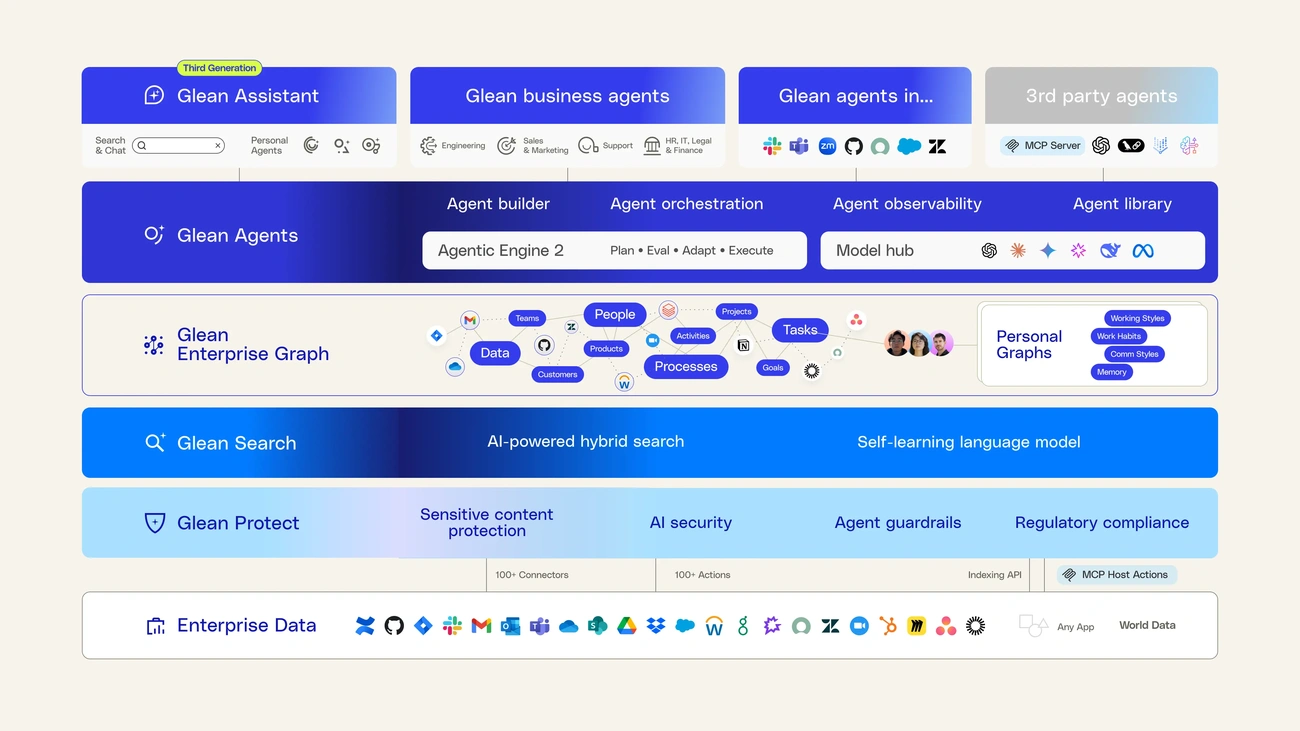
Image Source: Glean
What It Is
Glean earned recognition as #1 Applied AI in Fast Company’s 2025 World’s Most Innovative Companies for enterprise AI leadership. The platform connects to 120+ data sources through native integrations, indexing content across deal CRMs, shared drives, analytics platforms, and collaboration tools to create a permissions-aware knowledge graph. Deployment completes in 2 to 4 weeks, enabling firms to standardize governed AI infrastructure across funds and portfolio companies while maintaining model flexibility.
Why Private Equity Teams Use It
Investment teams automate knowledge retrieval across legal, diligence, IR, and operations, finding side letters, investment memos, board decks, and contracts in seconds. Prebuilt agents auto-populate DDQs and recurring templates based on past materials, whereas portfolio companies self-serve knowledge across departments without static intranets. The platform saves 110 hours per user annually, reduces internal support requests by 20%, and cuts employee onboarding time by 36 hours. Firms recover investments in under 6 months, with Glean Agents now performing over 100 million actions per year.
Key Capabilities
Glean Assistant provides AI-powered search and chat connected to organizational data, whereas Glean Agents execute . The platform enforces inherited permissions, supports multiple LLMs, and offers flexible hosting models. Enterprise Flex pricing delivers per-user licenses combined with pooled FlexCredits for advanced AI features. Organizations achieve 93% adoption within 2 years.automated workflows across systems
Pricing and Plans
Pricing starts at $40-50 per user per month, with Enterprise Flex Seats deployed organization-wide. A Forrester study documents 141% ROI over three years with $15.6 million net present value. Mid-market deployments (500-1,000 users) range from $270,000-$600,000 annually.
Ideal For
Large enterprises with 1,000+ users, complex information environments across 10+ integrated systems, and high adoption requirements benefit most from Glean’s comprehensive AI platform and measurable productivity gains.
Conclusion
Without a doubt, the private equity firms gaining competitive advantages in 2026 are those deploying AI strategically across their workflows. Each tool on this list addresses distinct pain points: relationship intelligence for deal sourcing, market data for valuation, expert networks for due diligence, and portfolio automation for LP reporting.
The firms documenting measurable results share one trait: they matched tools to specific workflow bottlenecks rather than chasing AI for its own sake. Start by identifying where your team loses the most time, then select the platform purpose-built for that problem. As adoption rates climb past 85%, the question shifts from whether to adopt AI to which tools will compound your competitive edge.
For private equity firms, selecting the right AI tools is only the first step. The greater value comes from integrating those tools into repeatable workflows, reliable data systems, and measurable portfolio operations. CyberMedics helps organizations design and implement custom software, automation, and reporting systems that align technology with business objectives.
Contact CyberMedics to discuss how AI-enabled workflow automation can support your investment team, portfolio operations, and long-term value creation strategy.
—