Systemic Solutions for Systemic Failures: Reducing Medical Process Errors Through Workflow Automation
Medical process errors are rarely the result of a single individual’s incompetence. Instead, they are the inevitable output of broken systems. When highly trained professionals in medical device manufacturing, healthcare operations, and laboratory management are forced to navigate fragmented workflows and disconnected legacy tools, mistakes are not just possible—they are structurally guaranteed.
To solve this, operational leaders must shift their perspective. Process errors are systemic rather than individual. Correcting them requires abandoning outdated manual methods in favor of intelligent workflow automation and rigorous approval tracking.
The Operational Cost of Manual Approvals
In highly regulated medical environments, the margin for error is non-existent. Yet, many organizations still rely on manual approval methods—such as spreadsheets, fragmented email chains, and physical paper trails—to manage critical operational workflows.
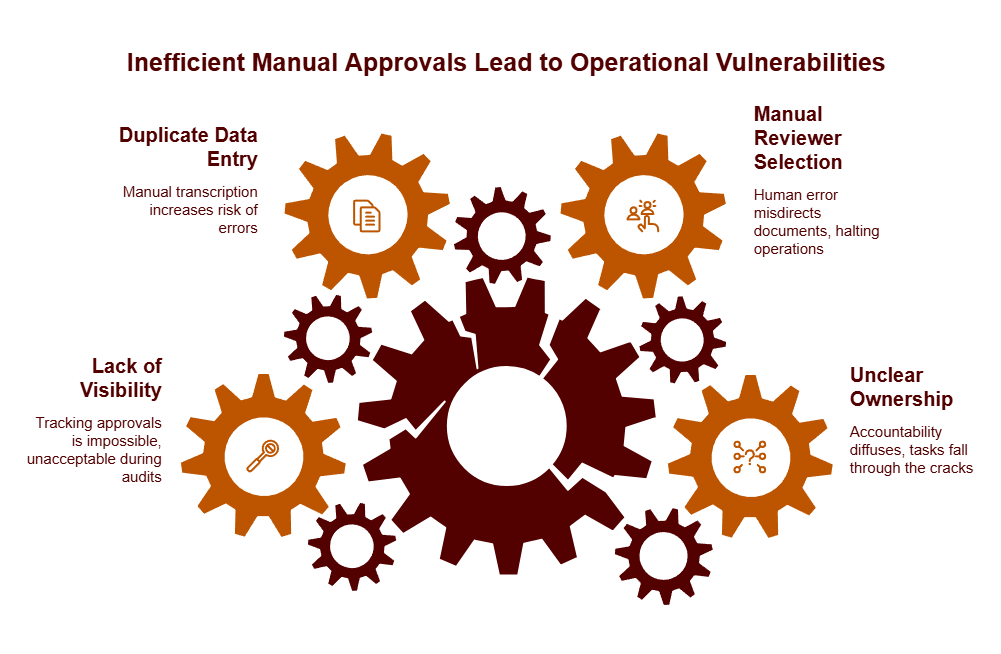
These manual methods simply do not scale. As operations grow in complexity, relying on manual processes introduces severe operational vulnerabilities:
- Unclear Ownership: When a critical document or quality control check is emailed to a group, accountability diffuses. Without a designated, system-enforced approver, critical tasks fall through the cracks or are delayed indefinitely.
- Manual Reviewer Selection: Trusting individuals to manually route documents to the correct department or regulatory reviewer invites human error. A single misdirected email can halt a manufacturing line or delay patient care protocols.
- Duplicate Data Entry: Disconnected legacy tools force staff to manually transfer data from one system to another. Every instance of manual data transcription exponentially increases the risk of typographical errors and data corruption.
- Lack of Visibility: In a manual system, tracking the status of a specific approval is nearly impossible without sending follow-up emails or physically locating a paper file. This lack of transparency is unacceptable during regulatory audits.
The financial and operational costs of these inefficiencies are staggering, but the regulatory and safety risks are even more severe.
Workflow Automation in Healthcare: Fixing the System
To eliminate these vulnerabilities, healthcare and medical manufacturing organizations must implement robust workflow automation. Workflow automation in healthcare functions by removing the human element from data routing and task assignment.
By utilizing intelligent, rules-based logic, automated workflows ensure that data and documents are instantly and accurately routed to the appropriate stakeholders. This automatic routing eliminates the ambiguity of manual reviewer selection. If a laboratory protocol requires sign-off from both the lab director and the compliance officer, the system sequentially routes the document to each party, preventing the process from moving forward until the necessary cryptographic signatures are collected.
Furthermore, integrating these automated workflows with existing operational databases eliminates the need for duplicate data entry. Information is pulled directly from the source of truth, preserving data integrity across the entire operational lifecycle.
Approval Tracking Software: Enforcing Consistency and Control
Automation dictates the path a process takes, but visibility ensures the process remains compliant. This is where dedicated approval tracking software becomes critical for regulated environments.
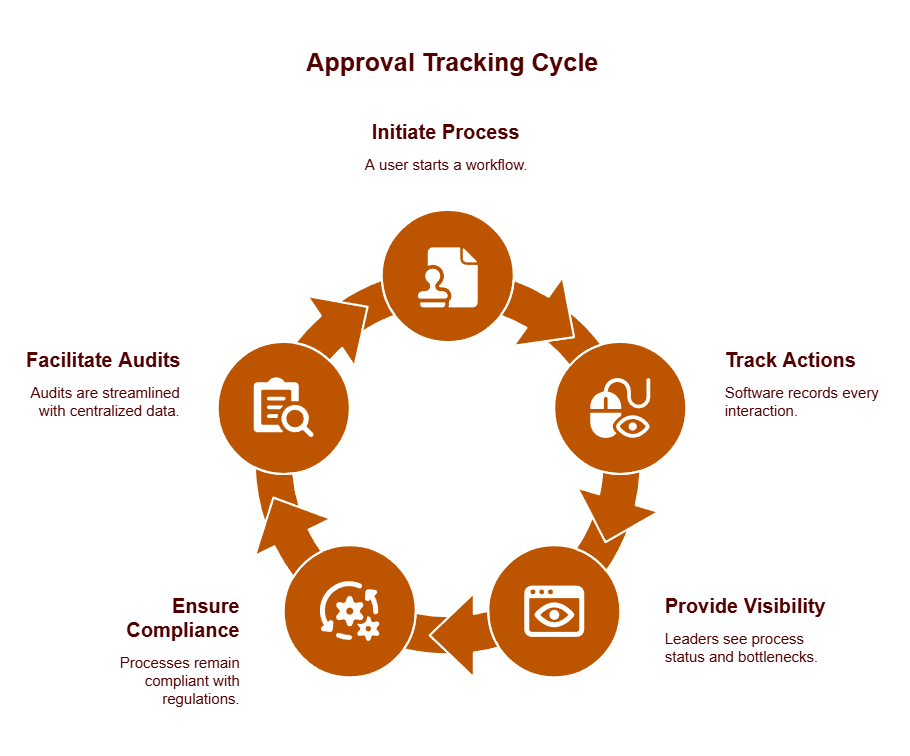
Approval tracking software provides a permanent, immutable ledger of every action taken within a workflow. Operational leaders gain instant visibility into:
- Who initiated a process.
- Who approved or rejected a specific step.
- The exact timestamp of every interaction.
- Bottlenecks where processes are routinely delayed.
In regulated industries subject to FDA or ISO audits, this level of accountability is not optional. Approval tracking replaces frantic, pre-audit paper chases with a centralized dashboard that proves systemic control and compliance at a glance.
The CyberMedics Approach: Process Before Software
While the technological capabilities of workflow automation are powerful, purchasing software is not a silver bullet. Effective automation must begin with rigorous process mapping and user-friendly design. Implementing technology over a broken process simply automates inefficiency.
Before a single line of code is configured, organizations must map their existing workflows to identify redundancies, unnecessary bottlenecks, and structural flaws. Only after the optimal path is defined should the technology be applied.
Additionally, user-centered design is critical to adoption. If a new digital workflow is overly complex or counterintuitive, staff will inevitably find workarounds, returning to the very manual methods the software was purchased to replace. The interface must be logical, streamlined, and aligned with the actual daily realities of medical and laboratory professionals.
Transitioning from Reactive to Proactive Process Control
For decades, the standard response to a medical process error has been reactive: identify the mistake, retrain the employee, and hope the error does not recur. This approach fundamentally misunderstands the nature of operational risk.
By implementing structured digital workflows and approval tracking software, organizations transition from reactive error correction to proactive process control. The system itself prevents the error from occurring by enforcing strict operational boundaries, ensuring that no step can be skipped and no required approval can be bypassed.
The mandate for operational leaders is clear. Audit your current processes, identify the manual vulnerabilities putting your organization at risk, and implement structured digital workflows and approval tracking. Move your organization out of the era of spreadsheets and into a state of total proactive process control.